





Clean Air (Human Rights) Bill
The Clean Air (Human Rights) Bill aims to establish the right to breathe clean air. The piece of legislation is sometimes referred to as Ella's Law, although it is still at the bill stage.
Ella Roberta was a nine-year-old from South London who, after more than 25 emergency hospital admissions over three years, suffered an acute asthma attack and died on February 15, 2013. Some time later, in 2020, a landmark coroner's report made Ella the first person in the world to have air pollution cited as a cause of death. Her mother, Rosamund Adoo Kissi-Debrah, agreed that the legislation be called Ella’s Law in memory of her daughter.
The bill sets out a number of items, thus:
"To require the Secretary of State to achieve and maintain clean air in England and Wales and to involve the UK HealthSecurity Agency in setting and reviewing pollutants and their limits. to enhance the powers, duties, and functions of various agencies and authorities in relation to air pollution. To establish the Citizens’ Commission for Clean Air (CCCA) with powers to institute or intervene in legal proceedings. To require the Secretary of State and the relevant national authorities to apply environmental principles in carrying out their duties under this Act and the clean air enactments, and for connected purposes."
Following its path through its first reading in the House of Lords in May 2022, it was hoped that the Clean Air (Human Rights) Bill may have become law before the ten-year anniversary of Ell's death, though the Bill only received its first reading in the House of Commons on December 6, 2023.
The bill defines acceptable concentrations and exposure levels of different types of pollutants at the local and atmospheric levels, both biological and chemical, and those that cause environmental harm as well as climate change. This list includes; Ammonia (NH3), Black carbon, Benzene, Butadiene, Formaldehyde, Carbon monoxide, Ground-level ozone, Hydrofluorocarbons, Hydrogen sulphide (H2S), Lead, Methane (CH4) , Naphthalene, Nitrogen dioxide (NO2), Nitrogen oxides (NOx) (expressed as NO2), Nitrogen trifluoride, Non-methane volatile organic compounds (NMVOCs), Oxides of nitrogen (NOx), Particulate matter (PM0.1, PM1, PM2.5 and PM10), Perfluorocarbons, Polycyclic aromatic hydrocarbons(PAHs) expressed as concentration of benzo(a)pyrene, Radon, Sulphur dioxide (SO2), Sulphur hexafluoride, Tetrachloroethylene, Trichloroethylene and Non-fluorinated gases; “Net UK carbon account” as defined in section 27 of the Climate Change Act 2008.
For full details of the nature of the Bill as of October 31, 2023 visit https://bills.parliament.uk/bills/3161
[edit] Related articles on Designing Buildings
- Air brick.
- Air change rate.
- Air conditioning.
- Air entrainment.
- Air filtration.
- Air infiltration.
- Air pollution.
- Air Quality Taskforce.
- Air quality.
- Air quality hub.
- Air rights.
- Air source heat pumps.
- Airspace.
- Air temperature.
- Air tightness.
- Air-supported structure.
- Argon.
- Carbon dioxide.
- Carbon monoxide.
- Clean Air Act.
- Clean Air Act and implications for the construction industry.
- Clean Air Zone.
- Compressed air plant.
- HVAC.
- Hydrogen.
- Indoor air quality.
- Indoor air velocity.
- Methane.
- Nitrogen.
- Ozone.
- Radon.
- Underfloor air distribution.
- Water vapour.
Featured articles
Check out some of the best features and news from Designing Buildings as well as key stories from around the web.

Why construction can't afford to ignore the skills gap.
Building Safety Regulator, 19 August

Gill Kernick appointed Independent Chair of Residents’ Panel.
Connecting knowledge, technology and conservation
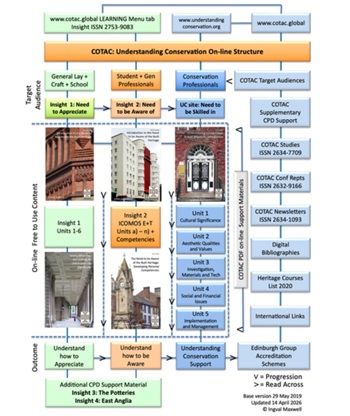
Building competence for the future of built heritage.
Building Regulations and Building Safety Act

CIOB publishes free advice for non-domestic clients.

Building Safety Newsletter from MHCLG.

An extraordinary record of steel engineering worldwide.

Households living near new pylons to save on bills.

ECA warns growth must not outpace grid capacity or skills.
The role of the client and decision making

CIOB response to built environment professions call for evidence.
Construction's sustainability reporting revolution
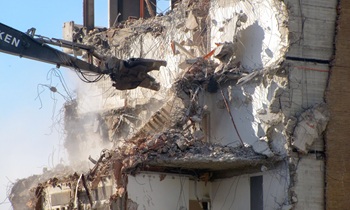
Tracking upfront embodied carbon with digital tools.
ECA welcomes procurement reforms

Public spending must back British jobs and skills.
Campaigning for Edinburgh: the Cockburn Association 1875-2049

The role of the civic voice in protecting character. Book review.